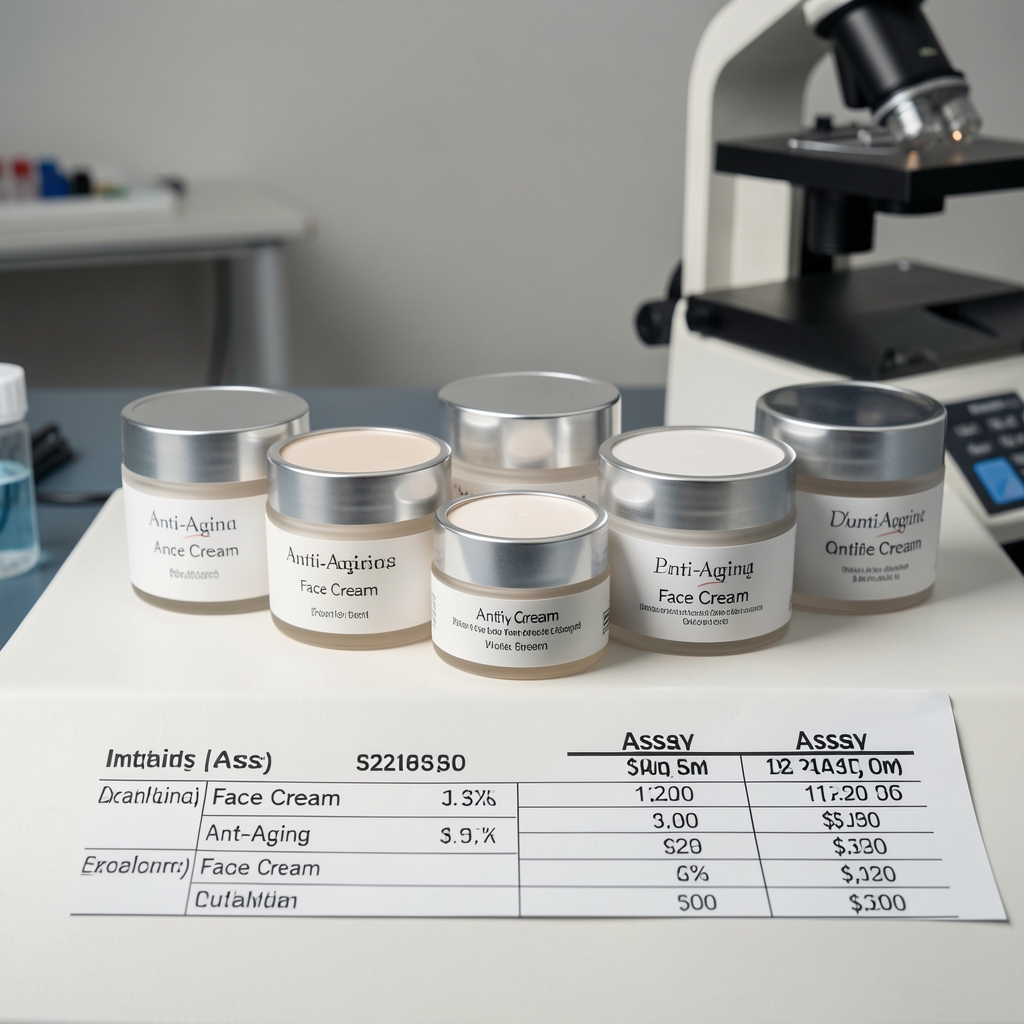
Each formulation catalogued within Ralev passes a defined sequence of sourcing, composition assessment, and independent batch verification before being assigned an entry reference number. The process is documented, repeatable, and open to audit.
Active ingredients are sourced from documented suppliers operating under food-grade processing standards. Each supplier is assessed against a reference checklist that includes facility certification status, declared processing methods, and historical lot consistency.
The declared micronutrient balance of each daily serving is assessed against published nutritional reference values. Serving composition data is extracted from the certificate of composition accompanying the raw material batch and cross-referenced with the product label.
Traceability of the ingredient from origin region to finished serving composition is documented in the lot record. The chain-of-custody file must contain: regional origin, supplier identifier, transit handling notes, and reception date at processing facility.
Ingredient profiles in Ralev supplements are selected based on published nutritional research and undergo independent batch verification for quality and labelling accuracy. Verification is performed by a third-party laboratory operating independently from the supplier.
Ralev products are nutritional food-supplements registered with the applicable local regulatory authority under food-supplement classification. Products meet compositional and labelling requirements for nutritional supplement categories. The audit confirms label accuracy against the verified composition data.
Upon successful completion of stages 01–05, the formulation is assigned a catalogue entry reference number and a revision identifier. The entry is archived with all supporting documentation. Subsequent lot updates trigger a re-assessment beginning at stage 04.
The Ralev sourcing map spans botanical ingredient regions in Central and Southern Europe, alongside marine-derived collagen and hyaluronic acid suppliers operating in Northern Europe. Each region is selected based on documented extraction standards and consistency of elemental concentration across successive lots.
Sourcing prioritises suppliers whose facilities maintain food-grade processing standards and whose lot records include a declared origin map. Supplier relationships are reviewed annually against a set of continuing criteria: lot consistency, documentation completeness, and audit accessibility.
Where a supplier cannot produce chain-of-custody documentation covering the full journey from regional harvest to processing input, the ingredient is excluded from the catalogue regardless of cost or availability advantage.

Each active ingredient's concentration per serving is measured against the declared label value. The acceptable variance range is defined per ingredient category. Results are recorded in the lot verification file and archived by batch code.
The ingredient list on the finished product label is cross-referenced against the certificate of composition. Any discrepancy between declared and measured content triggers a hold on catalogue entry assignment until the inconsistency is resolved by the supplier.
Microbiological and heavy metal screening is performed on each verified batch. Results are retained in the lot record. Contaminant thresholds follow applicable EU and UK food-supplement compositional guidelines.
The following reference table documents the declared nutritional support roles of key catalogued ingredients, based on published nutritional research. Roles describe the contribution to normal physiological function, not outcomes.
Supports normal cognitive function and immune health.
Contributes to normal energy metabolism and reduction of tiredness.
Supports normal function of the immune system.
Contributes to normal energy production.
Contributes to protection of cells from oxidative stress.
Involved in cellular energy production.
Supports the normal function of the immune system.
Contributes to skin hydration and moisture retention as a topical skincare ingredient.
Anti-aging skincare compositions catalogued by Ralev — including collagen and hyaluronic acid face creams, moisturising formulas, and skin rejuvenation products — follow a parallel verification protocol to the supplement process. The declared active ingredient concentration per gram is the primary specification.
Collagen molecular weight and hyaluronic acid chain length are documented in the raw material specification sheet. These parameters directly affect the hydrating formula's performance profile and are retained in the lot record alongside the certificate of composition.
Skincare ingredient suppliers are assessed on the same traceability criteria as supplement ingredient suppliers. Anonymous ingredient listings or incomplete lot documentation result in exclusion from the catalogue regardless of product category.
Independent batch verification means that each production lot is tested by a third-party laboratory that has no contractual relationship with the ingredient supplier. The laboratory receives a sample drawn from the finished batch and tests it against the declared specification. The resulting report is retained in the lot archive alongside the supplier's own certificate of composition.
Food-grade processing standard, for the purposes of the Ralev catalogue, refers to facilities whose processing environment, equipment, and handling procedures meet the compositional and hygiene requirements applicable to the EU and UK food-supplement categories. This is a supply-chain assessment criterion, not a regulatory certification claim. Documentation is assessed per supplier, per lot.
Each catalogue entry carries a revision identifier. Entries are reviewed when: (a) a new production lot is received by the supplier, (b) the supplier's facility or processing method changes, or (c) the independent laboratory verification report indicates a result outside the acceptable variance range. Routine annual review is conducted for all active entries.
No. The Ralev catalogue documents formulation data: ingredient ratios, daily serving compositions, supplier origin categories, and verification status. Nutritional support roles described in catalogue entries reflect the declared function of the ingredient based on published nutritional research. The catalogue does not make outcome predictions. We recommend speaking with a qualified wellness or nutrition professional before introducing any supplement to your daily routine, particularly if you have specific dietary requirements.
Selected documentation from the lot record archive — including summary verification reports and certificate of composition summaries — can be requested via the editorial contact address. Full lot records including supplier-specific chain-of-custody files are retained internally and made available to regulatory bodies upon request in accordance with applicable UK food-supplement notification requirements.